An Unlisted Course Link Is Not a Controlled China Pilot
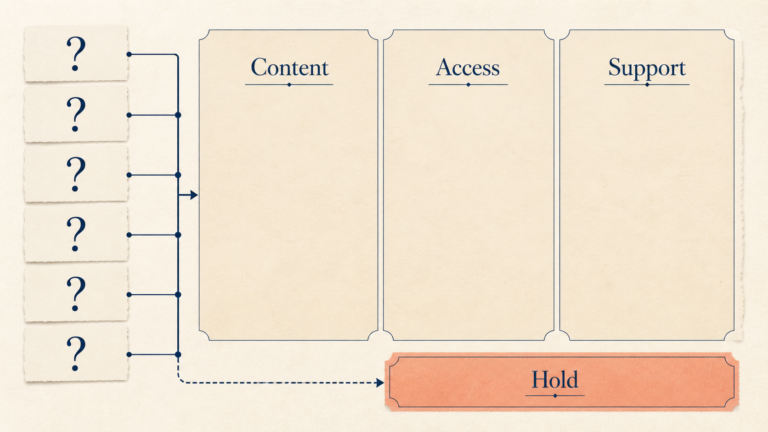
Removing a course from a homepage can reduce discovery. It does not by itself control participants, access, purchase scope, versions, support, or stop conditions in a China pilot.
Published analysis
Use each article for the decision and evidence scope stated on the page.
Removing a course from a homepage can reduce discovery. It does not by itself control participants, access, purchase scope, versions, support, or stop conditions in a China pilot.
A China AI-tool changelog should open a small review ticket, not automatically force a course relaunch. Route each change through five practical questions.
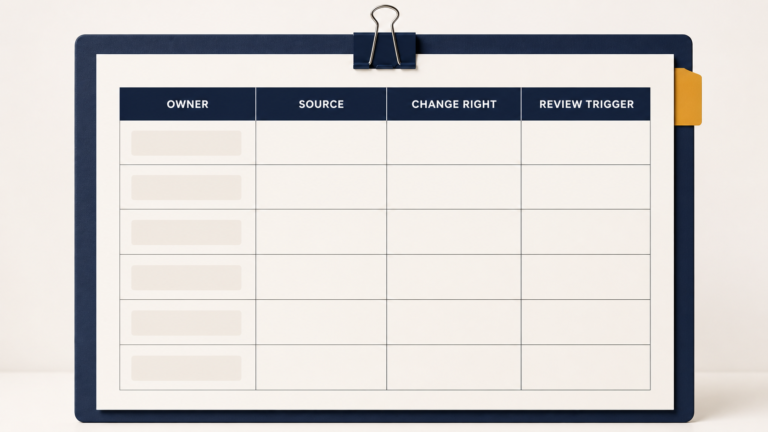
Build a China AI tools radar around source dates, changed work units, evidence limits and review triggers—not a fast-moving list of launches.
Before publishing a course PDF in China, decide whether it is a searchable problem entry, an independent resource, or controlled course material. Those roles need different rights and version controls.
Submitting a sitemap can help a crawler find URLs. It does not prove that a China-facing knowledge base is indexed, understood, clicked, or producing qualified enquiries.
A course listing is only one distribution unit. Separate sharing, promotion, shelf placement, and channel links before testing course distribution in China.
Before measuring China demand, audit whether a buyer can repeat your offer: audience, outcome, delivery, support, access and validity.
A workshop seat price should not quietly promise AI tool access, deployment, credentials, or unlimited support. Use a five-line price card before testing an AI workshop in China.
A working MCP screenshot is not a transferable lesson. Separate the capability, service, access, cost, test evidence, and stop condition before adapting a course for China.
Before reusing an AI-assisted course asset in China, preserve its origin, edits, labels, metadata, version, and publishing decisions in one release record.