

September 3, 2026
A Screenshot Folder Is Not a China Community-Research Brief
Turn Chinese community observations into a traceable brief with source context, visible facts, limits, hypotheses and prohibited claims.
Published analysis
Use each article for the decision and evidence scope stated on the page.
Turn Chinese community observations into a traceable brief with source context, visible facts, limits, hypotheses and prohibited claims.

Subtitles improve sentence-level access, but a Chinese course still needs a clear overview, audience, learning outcome and consistent curriculum structure.

Build a China creator brief around claims, evidence, audience problems and limits before deliverables. It is not a sales promise.

Test Chinese course language across course, question and commerce surfaces before renaming an expert product. A query is not demand.

When a China workshop also needs onboarding, support, records or reporting, make the operating layer explicit before naming a price.
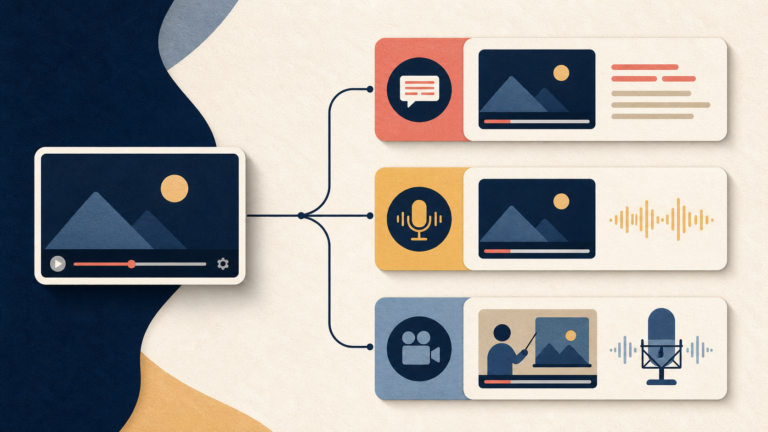
Subtitles, AI dubbing and Chinese re-recording are different release artifacts. Choose the layer that must survive the lesson.

Captions, interpretation and facilitation solve different moments in a live China cohort. Assign each role before choosing a tool.

Removing a course from a homepage can reduce discovery. It does not by itself control participants, access, purchase scope, versions, support, or stop conditions in a China pilot.
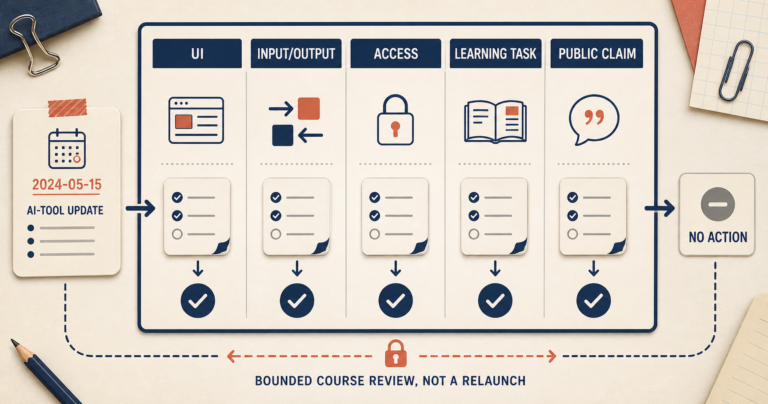
A China AI-tool changelog should open a small review ticket, not automatically force a course relaunch. Route each change through five practical questions.
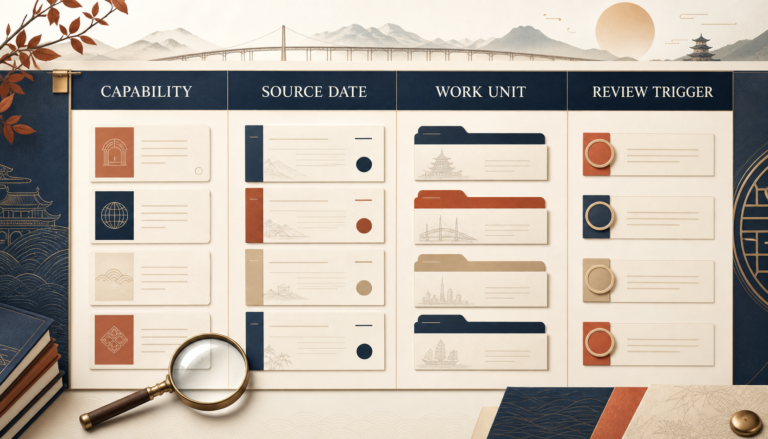
Build a China AI tools radar around source dates, changed work units, evidence limits and review triggers—not a fast-moving list of launches.