
Direct Answer
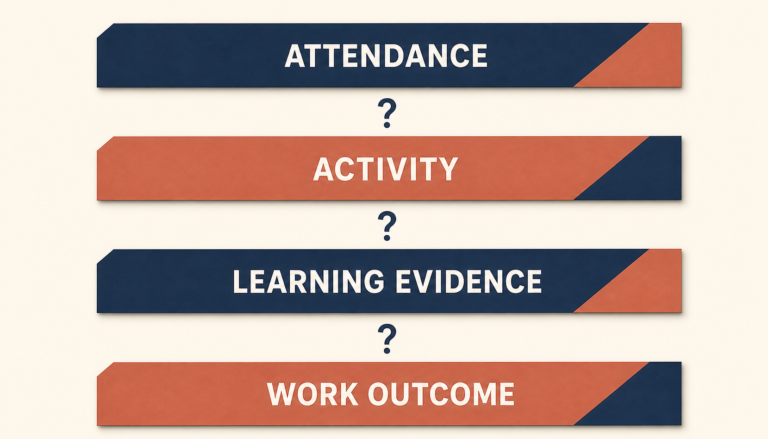
A Completion Marker Is Not an Outcome Marker for China Training
Learn how to report completion, attendance and activity markers without turning them into unsupported China training outcomes.
H2 · Validate Fit
Can the existing product travel, and what is the smallest useful test?
Direct answer
Separate product evidence, buyer evidence and channel evidence before investing in a full launch or translation.
Start here · Primary guide
A good product, a buyer and a China channel are separate tests. Use this framework to find the missing evidence before you localize or launch.
Read the complete guide →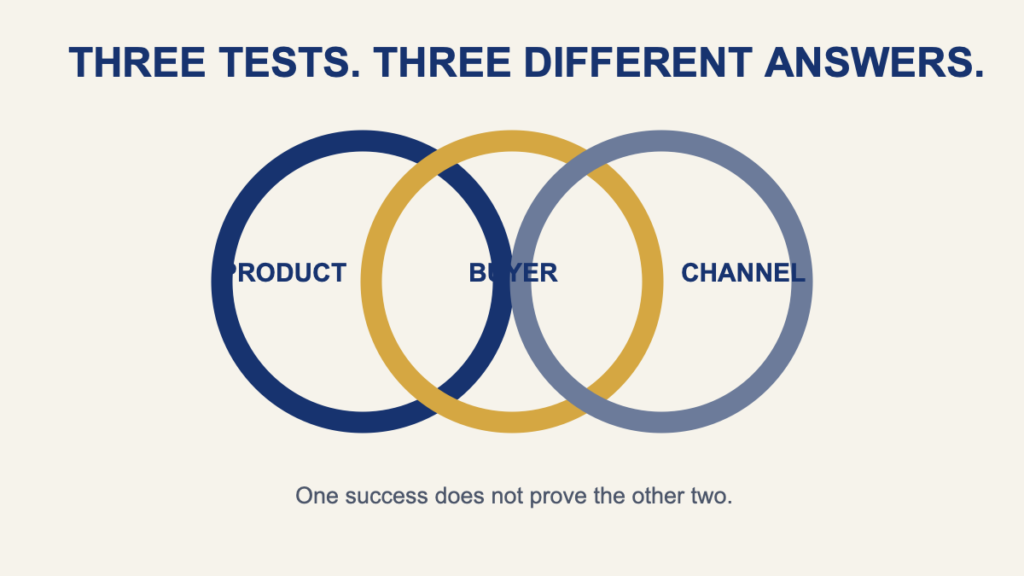
Direct Answer
Learn how to report completion, attendance and activity markers without turning them into unsupported China training outcomes.
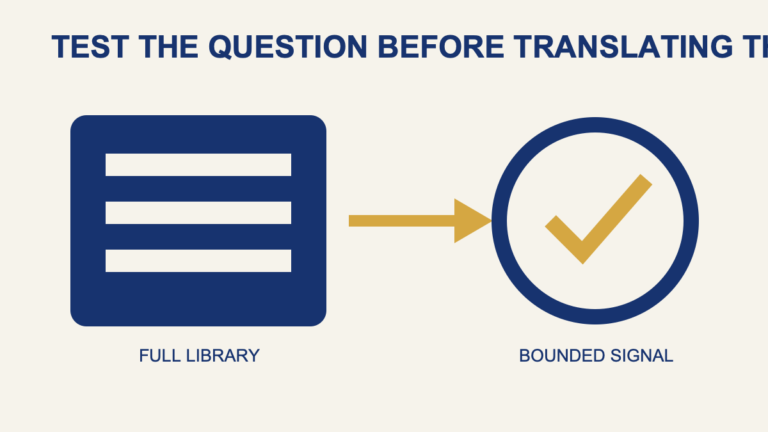
A China-market test does not have to start with a full course translation. Define one product, one buyer question, limited permissions, and a real stop condition.
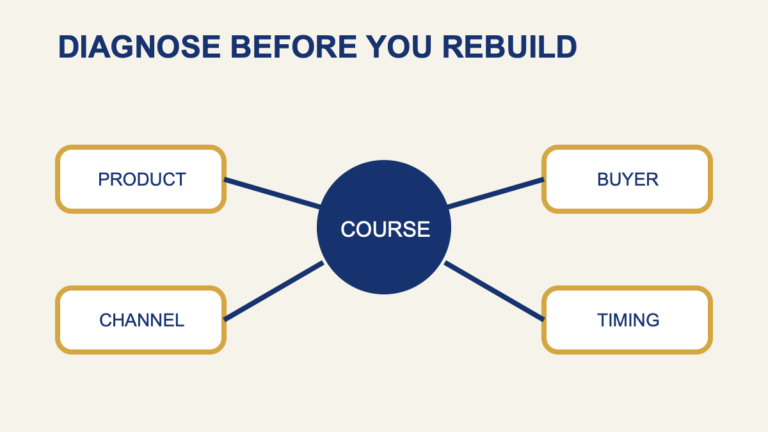
Flat course sales are a symptom, not a diagnosis. Separate product, buyer, channel, delivery, and market problems before rebuilding the curriculum.
Comparison / Playbook
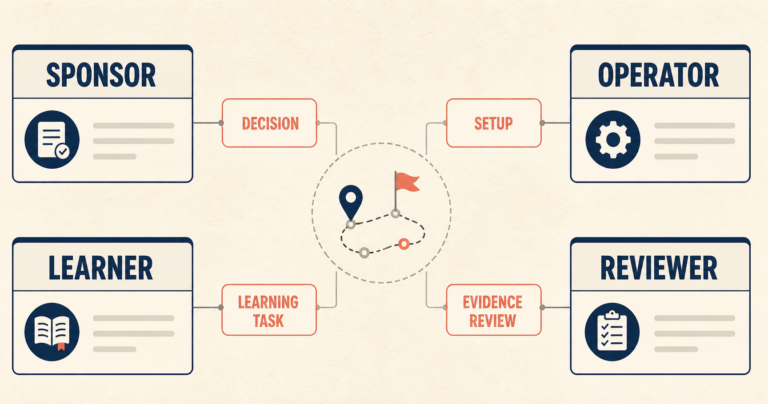
Before a China-facing course pilot, separate sponsor, operator, learner and reviewer roles. They may overlap, but assumptions must be visible.
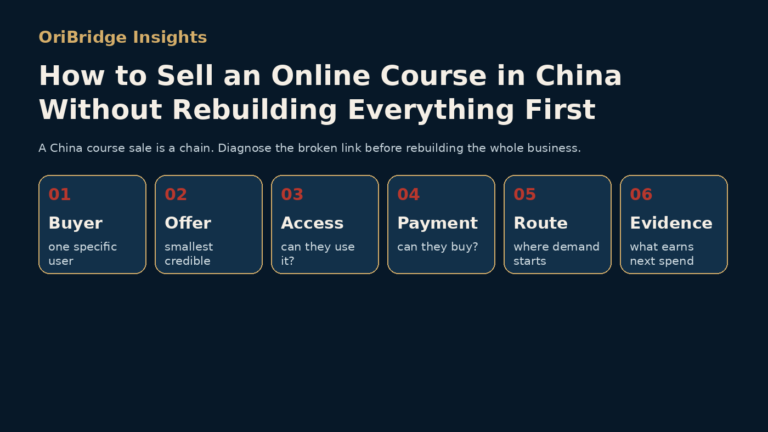
Before rebuilding a course for China, map the buyer, access, payment, delivery and approval links to test. Platform pages do not prove a route works.
Tool / Checklist

Choose 3–5 signals for a China course pilot before launch. Separate access, practice, support and outcome signals instead of reporting one vanity number.
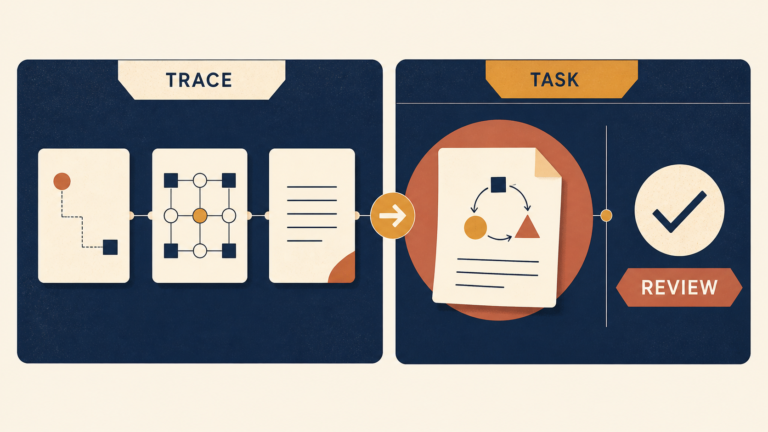
Separate application observability traces from workshop evidence and consulting outcomes in a China-facing AI delivery.
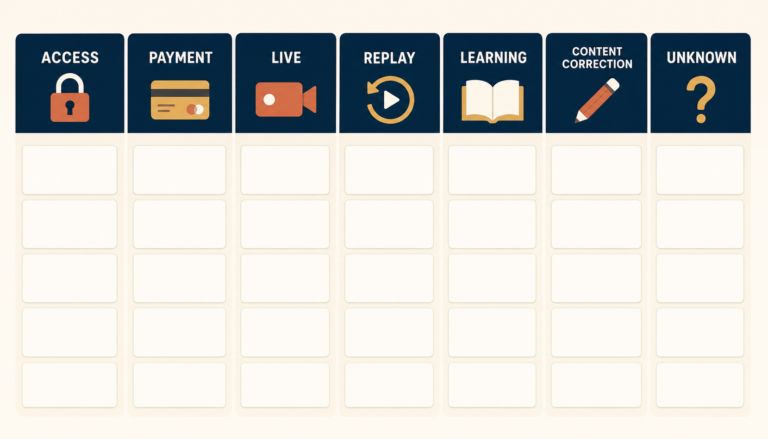
Classify learner support events by access, payment, live session, replay and learning task before reading them as demand or quality signals.

Before measuring China demand, audit whether a buyer can repeat your offer: audience, outcome, delivery, support, access and validity.

Record what each China-test observation means before the test begins: continue, revise, or stop the defined hypothesis without mistaking a route constraint for demand evidence.

Once a China test is designed, register every promised asset and decide whether to test, replace, defer, or stop promising it on the proposed route.
Case / Evidence
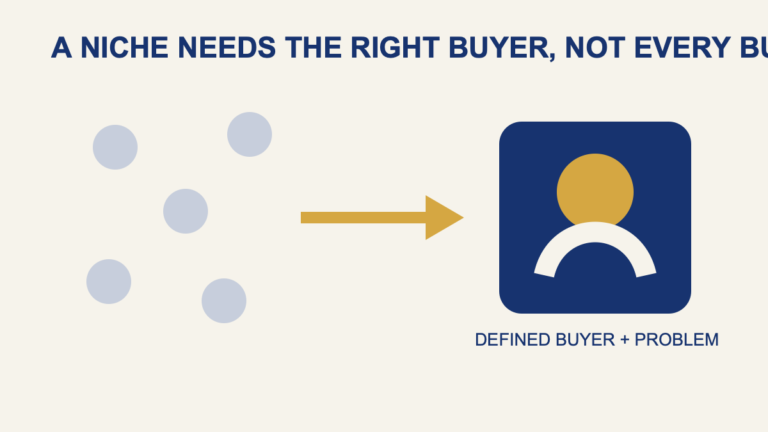
A mass audience is not the entry requirement for a second market. For niche experts, test a defined buyer problem, delivery path, and stopping condition first.
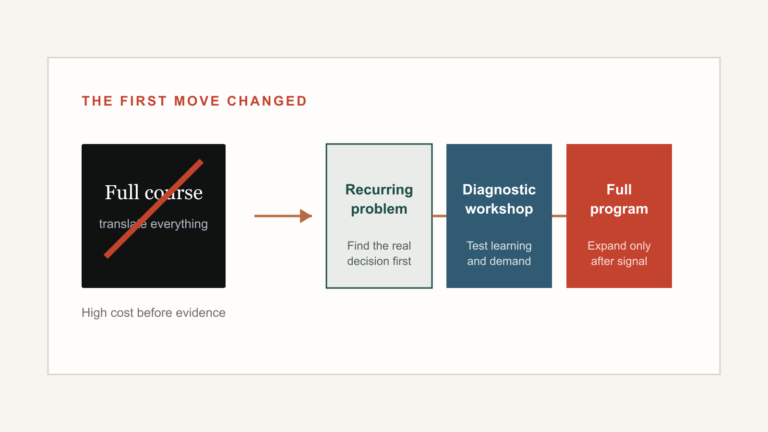
Before localizing a complete course for China, choose the first decision you need to test: problem recognition, format, route, or delivery.